
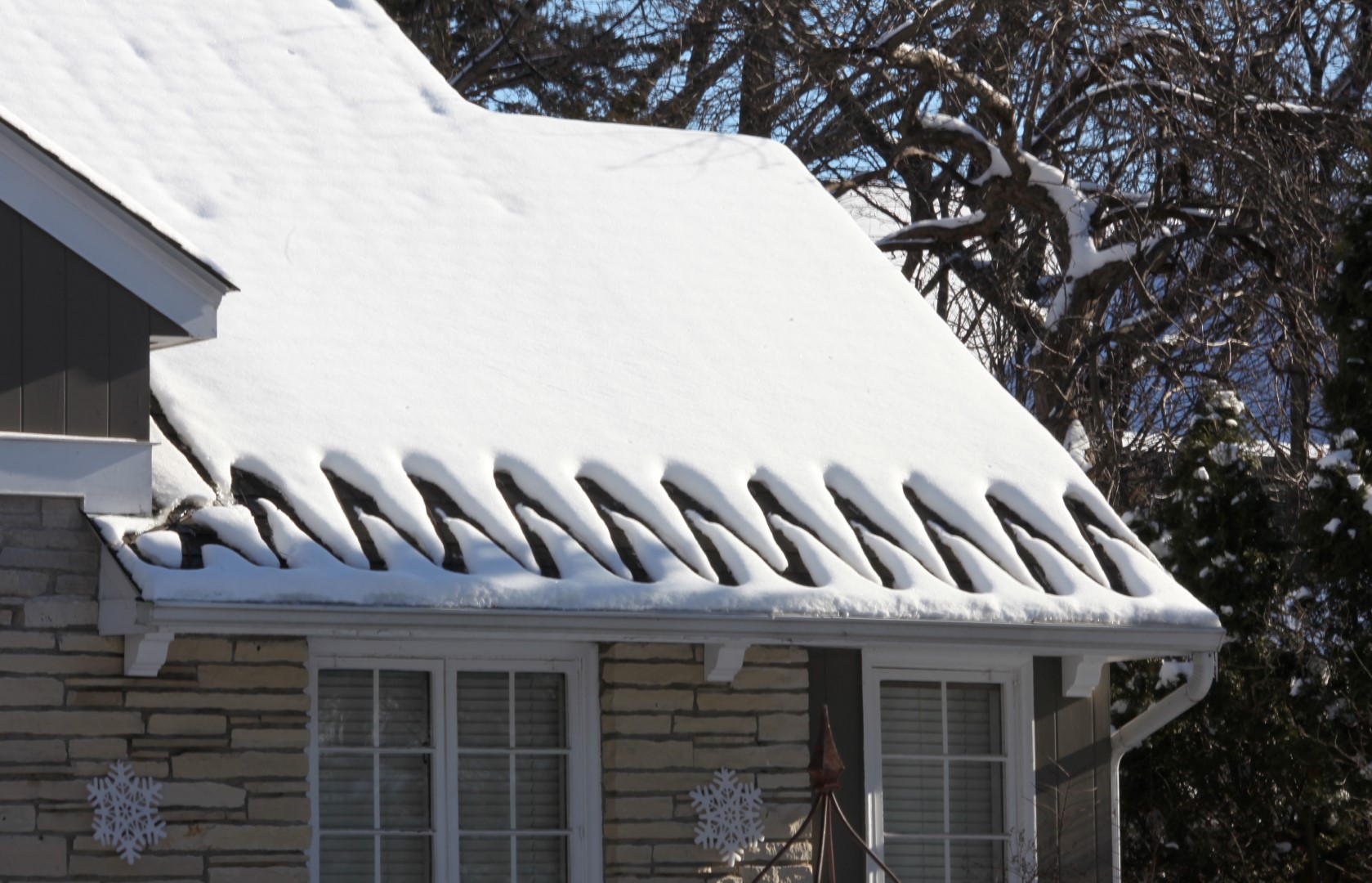
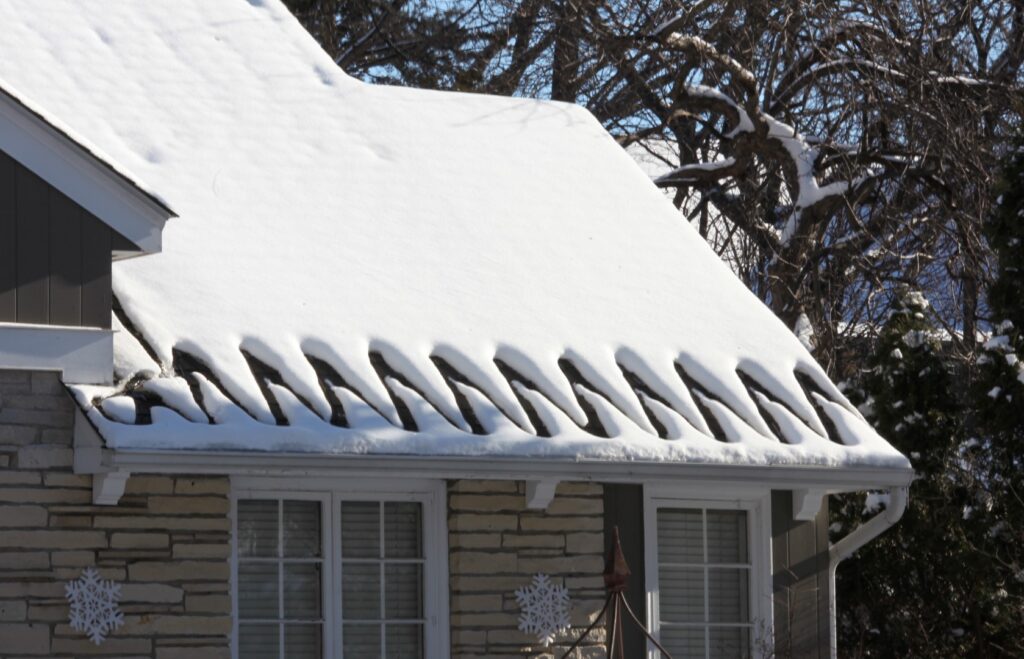
In many winter inspections across Connecticut, ice dams and winter leaks rarely come down to “bad shingles.” More often, they come from how heat, air, and moisture move through the home. Winter turns the roof into a boundary between warm indoor air and cold outdoor conditions. Snow sits longer, temperatures swing more, and small weaknesses become obvious.
Snow load is the first part of the equation. Roof systems are built to carry weight. Still, heavy, wet snow adds stress and can expose weak areas. You might see it in older decking, tired fasteners, or roof planes that already have slight dips.
More commonly, snow load changes how water behaves. Meltwater drains slower under snow cover. It also stays in contact with the roof longer. That extended contact matters in winter because water can refreeze before it leaves the roof.
The second part is heat loss through the attic. Warm air escapes from the living space into the attic through gaps and bypasses. Common examples include recessed lights, attic hatches, plumbing chases, open wall cavities, and leaky ductwork.
When that warm air reaches the attic, it raises attic temperatures. It also warms the roof deck from below. Snow on the upper roof can start melting even when outdoor temperatures stay below freezing.
That meltwater runs down the roof until it reaches the colder eaves and overhangs. Those areas sit outside the heated footprint of the home. They stay colder because outdoor air cools them from above and below.
When meltwater hits that cold edge, it refreezes. Over time, repeated freeze-thaw cycles build a ridge of ice at the eaves.
This is the core mechanism of ice dam formation: a warmer roof surface above, a colder roof edge below, and repeated melting and refreezing in between. The majority of ice dam issues we evaluate are not caused by one storm. They come from a pattern that repeats across the season.
Once an ice dam forms, water has fewer places to go. It can back up under shingles and into seams that were never meant to hold standing water.
From there, water intrusion often shows up in predictable ways. Homeowners may notice stains near exterior walls, wet insulation at the eaves, or dripping at soffits. Leaks can also appear “random” because water can travel along framing before it becomes visible.
This is why winter leaks can confuse homeowners. A roof may handle heavy rain without issue, then leak during a snow event. Rain sheds off a roof. Ice dams hold water in place.
Roof heat cables (often called heat tape) are designed to create a controlled melt path along the eaves. Installers usually place them in a zig-zag pattern near the roof edge. They may also run them into gutters and downspouts. The goal is simple: keep a narrow channel open so meltwater can drain instead of refreezing at the edge.
Heat cables convert electricity into heat. That heat warms the immediate roof surface where the cable sits. If the cable runs through gutters, it can also help keep a drainage path open.
The goal is not to “heat the whole roof.” The goal is to prevent the eave area from becoming a solid ice barrier.
Used appropriately, heat cables can reduce risk in certain situations. They are most useful when the immediate objective is better drainage at the roof edge during prolonged cold weather.
They tend to help when:
In other words, heat cables can be a practical tool for managing the last few feet of the roof system—where ice dams form.
Heat cables often come up as a “solution,” but it helps to define the job they can realistically do.
Heat cables can create a drainage channel. They do not change the conditions that create melting higher up the roof. If attic heat loss keeps warming the roof deck, snow can continue to melt above the cable line. The cable then has to manage a steady supply of meltwater. In a long cold stretch, that can turn into constant maintenance rather than a true fix.
Common limitations include:
There is another nuance worth mentioning. Heat cables can create uneven melt patterns. That isn’t automatically a problem. But it can concentrate water flow into specific areas. If those areas include a weak seam or vulnerable flashing transition, the roof can still leak.
None of this means heat cables are “bad.” It means they are a tool with a specific role. The bigger question is whether the home is asking that tool to compensate for a system imbalance.
When winter roof issues repeat, the most reliable path forward is system-level prevention. That system includes the roof covering, the drainage layers beneath it, the attic environment below it, and the transitions where roofs meet walls, chimneys, and penetrations.
Insulation slows heat transfer from the living space into the attic. But in winter roof diagnostics, “more insulation” is not always the first move.
If warm air is leaking into the attic through bypasses, insulation alone won’t solve the problem. In some cases, it can even hide the symptom by making the attic feel less obviously warm while the air leakage continues.
A balanced approach looks at:
People often describe ventilation as “letting the attic breathe.” The practical goal is temperature and moisture control.
A typical design uses intake at the soffits and exhaust at the ridge (or other high points). What matters most is balance. If intake is blocked, the attic can’t pull in cold air. If exhaust is weak, warm air lingers at the roof deck. If exhaust is strong but intake is weak, the attic can pull conditioned air from the home and increase heat loss.
In Connecticut homes, we often find ventilation systems that exist on paper but underperform in reality. Blocked soffits, short-circuited airflow, and mixed vent types are common causes.
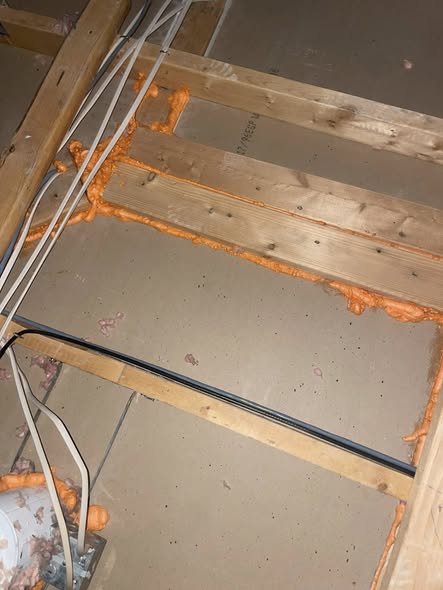
Air sealing is one of the most overlooked drivers of ice dam conditions. Heat doesn’t only move by conduction through insulation. It also moves by air leakage.
Even small gaps can move a surprising amount of warm, moist air into the attic. Common bypasses include:
When warm air enters the attic, it warms the roof deck. It also carries moisture. That moisture can condense on cold surfaces and reduce insulation performance over time.
A roof that performs well in winter isn’t only about shingles. It’s about the layers beneath and the details at the edge.
Underlayment selection and installation, ice-and-water protection at eaves and valleys, and decking condition all influence how resilient a roof is when water backs up.
Ice dams create a unique stress test. Water is held in place and can push upward under the roof covering. Strong detailing and appropriate protection help the roof resist that type of event.
Many winter leaks that look like “ice dam leaks” are actually flashing leaks that become visible during ice dam conditions.
Valleys, chimneys, skylights, step flashing at walls, and pipe penetrations all depend on precise detailing. When ice dams form, water can be redirected into these transitions in ways that normal rainfall doesn’t replicate. That’s why a winter evaluation should include a close look at flashing performance, not just the field of the shingles.
At MJT Roofing, our focus during winter roof evaluations is identifying the structural causes of damage rather than applying temporary mitigation.
That process typically includes:
The goal is to connect what you’re seeing inside the home—stains, drips, or recurring ice buildup—to the mechanisms causing it. Often, the most valuable outcome is clarity. You learn whether heat cables are a reasonable management tool for your roof, or whether the home is signaling a deeper system issue.
Roof heat cables can be helpful in the right context, especially as a way to maintain a drainage path at the roof edge during prolonged cold weather. But when ice dams and winter leaks repeat, the most dependable long-term improvement usually comes from understanding the system: how heat is escaping, how the attic is ventilating, and how the roof is detailed to manage water when conditions are at their worst.
If you’ve experienced winter roof concerns, a professional evaluation can help determine whether your home is at risk.
MJT Roofing | Winter Roof Damage Prevention Specialists | Connecticut