Winter Flashing Failures After a Winter Season

Roof Inspection After Winter

Winter is hard on Connecticut roofs in a way that isn’t always obvious from the ground. You might not see a missing shingle or a dramatic leak, yet you notice a faint water stain, a musty attic smell, or a drip that only shows up after a thaw.

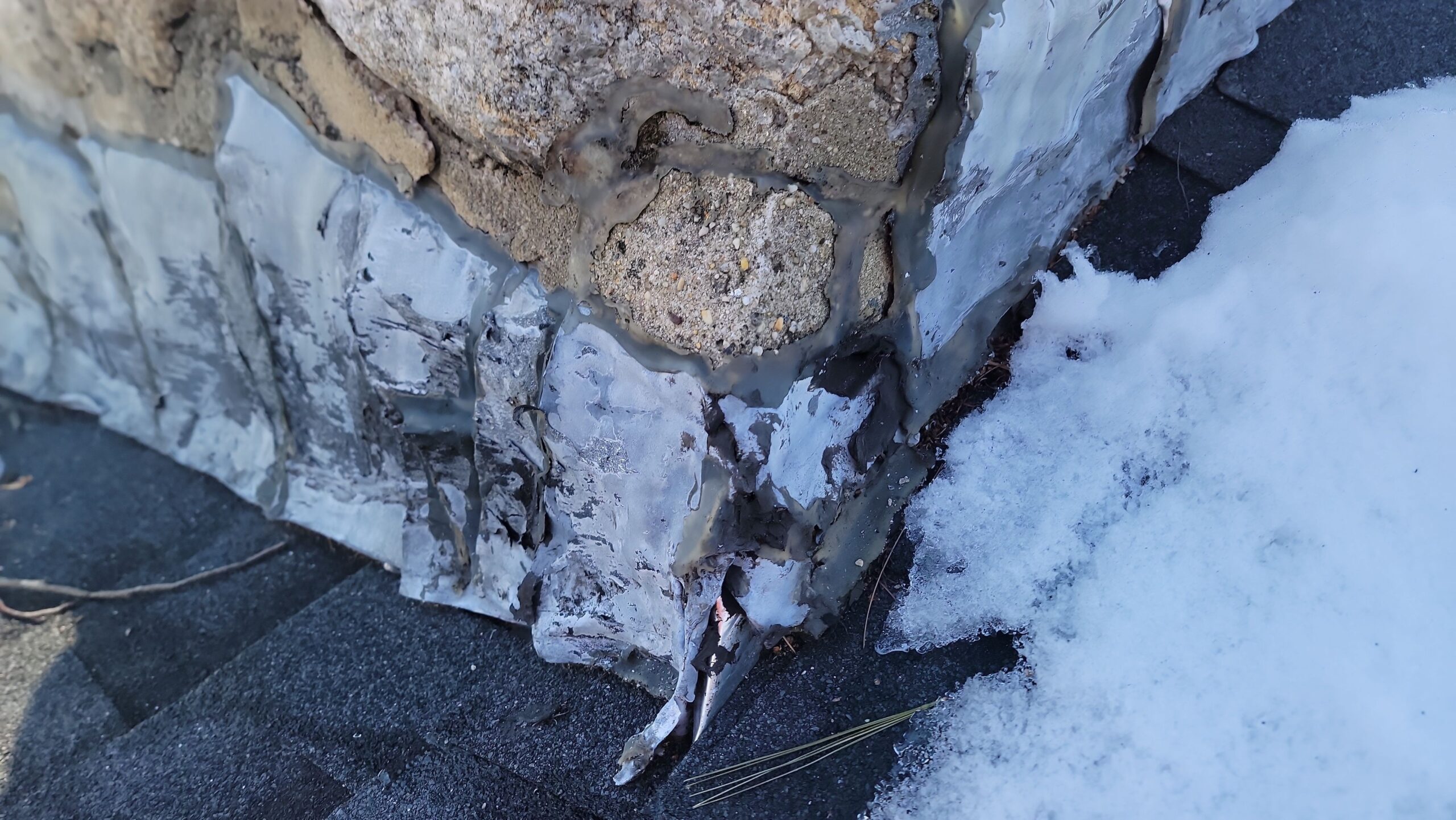
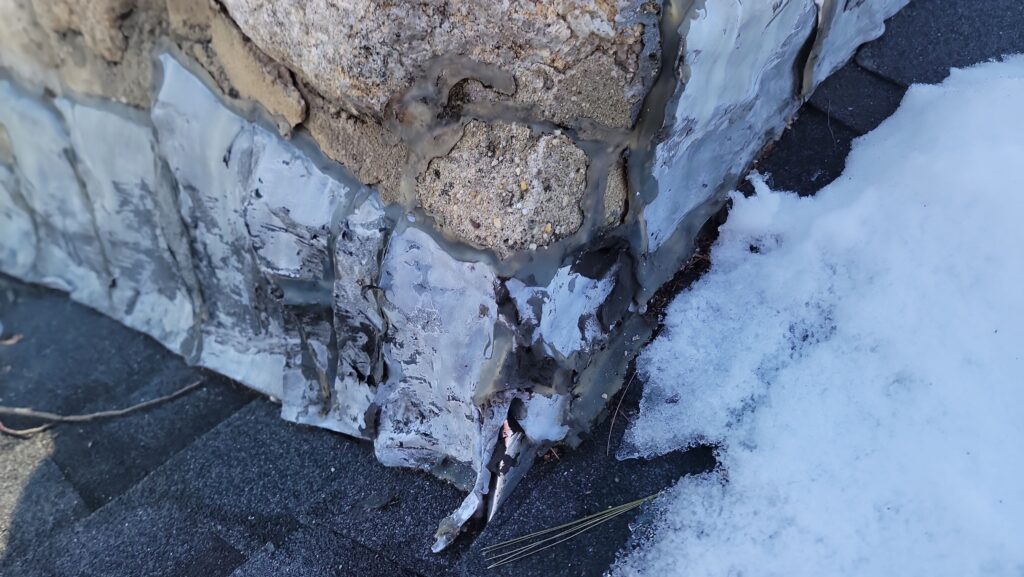
If you’re scheduling a roof inspection after winter, flashing deserves special attention. Flashing is the thin metal (or membrane) system that seals roof “intersections” where water naturally concentrates—chimneys, valleys, walls, skylights, and vents. When it fails, water doesn’t need a big opening to get in.

At MJT Roofing, we diagnose winter-related roof issues across Connecticut by looking at the roof as a system: how snow, ice, wind, and temperature swings interact with drainage, ventilation, and the details that keep water out.

How winter conditions cause flashing to fail

Flashing failures in winter usually aren’t about one storm. More often, they’re the result of repeated freeze-thaw cycles, ice backup, and movement between materials that expand and contract at different rates.

Freeze-thaw expansion opens micro-gaps

Metal flashing, masonry chimneys, and asphalt shingles all move differently as temperatures swing. Meanwhile, sealants can stiffen in cold weather. As a result, tiny separations can form at seams, corners, and fasteners—small enough to miss, but large enough to wick water.

Ice backup pushes water where it shouldn’t go

When snow melts and refreezes at the eaves, water can back up under shingles. In contrast to normal rain flow (down and off the roof), ice backup forces water sideways and upward. That’s when flashing at eaves, step flashing along walls, and transitions near dormers become high-risk.

Where professional diagnostics help

A homeowner can spot symptoms, but pinpointing the entry point often takes a trained process—because water can travel before it shows up inside.

Bullet breakdown

  • Inspect step flashing and counterflashing at sidewalls and chimneys for separation, corrosion, or missing pieces
  • Check valleys for debris, lifted edges, nail exposure, and worn valley lining
  • Evaluate pipe boots and vent flashings for cracking, shrinkage, or collar gaps
  • Look for ice-and-water shield coverage issues at eaves and vulnerable transitions
  • Trace interior staining patterns to likely exterior pathways (attic, sheathing, chimney chase)
  • Confirm fastener placement and sealant condition where appropriate (without relying on “caulk as a system”)

Limitations and misconceptions

One of the biggest misconceptions is that flashing problems can be solved permanently with surface caulk alone. For example, caulk may temporarily reduce water entry, but it can crack again with the next cold snap or pull away as materials move.

Another common issue is assuming the leak is “right above the stain.” Ultimately, water often enters at a flashing transition, travels along decking or framing, and appears several feet away.

Finally, not every winter leak is a shingle problem. Therefore, replacing shingles without addressing the flashing detail underneath can lead to repeat issues.

The roof system behind winter flashing failures

Flashing performance is tied to the whole roof system. If the attic environment is driving ice formation or condensation, flashing details get stressed more often.

Insulation

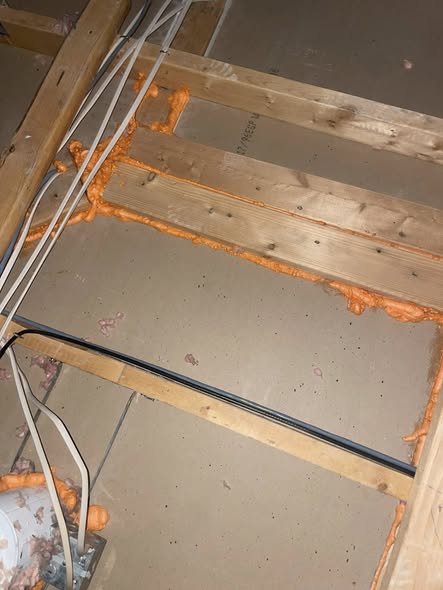
Uneven insulation can create hot spots on the roof deck. Meanwhile, that localized warming melts snow in patches, feeding refreeze at colder edges and increasing the chance of water backing up toward flashing transitions.

Ventilation

Balanced intake and exhaust ventilation helps keep roof deck temperatures more consistent. In addition, it reduces moisture buildup in the attic that can mimic a roof leak.

Air sealing

Warm air leaks from the home into the attic can accelerate melt patterns and add moisture. As a result, you can see staining or frost that looks like a flashing leak, even when the roof exterior is intact.

Drainage & flashing

Gutters, downspouts, valleys, and roof-to-wall transitions all influence where water concentrates. Therefore, a winter-focused inspection should look at how water is supposed to move—and where it’s being forced to move differently due to ice.

What we evaluate in Connecticut homes

A Connecticut winter inspection isn’t just a quick glance for missing shingles. We typically focus on the details that fail quietly:

We examine chimney flashing (step flashing and counterflashing), pipe boots, skylight transitions, valleys, and roof-to-wall areas where snow can drift and refreeze. We also look for signs of prior “patching” that may be masking a detail problem, and we evaluate the attic for ventilation balance, insulation gaps, and air leakage that can drive ice backup.

For homeowners who want to learn more about your options, you can explore our roofing services page, read about our professional roof inspection process, and check out our seasonal guide on winter roof leak causes in Connecticut. If you’re in our coverage area, our local team also serves many towns across the region—see our Connecticut service area page for details.

Schedule an inspection

If you’ve noticed staining, drafts near chimneys, or leaks that only appear during thaws, a professional evaluation can clarify whether you’re dealing with a flashing detail, an ice backup pattern, or an attic-driven issue.

A careful inspection after winter can help you plan the right fix—without guessing, over-patching, or replacing components that aren’t actually failing.
Roof Heat Cables: Do They Prevent Ice Dams?

Understanding Snow Load, Heat Loss, and the Real Cause of Ice Dams

What’s Actually Happening on the Roof in Winter

In many winter inspections across Connecticut, ice dams and winter leaks rarely come down to “bad shingles.” More often, they come from how heat, air, and moisture move through the home. Winter turns the roof into a boundary between warm indoor air and cold outdoor conditions. Snow sits longer, temperatures swing more, and small weaknesses become obvious.

Snow load: stress and drainage time

Snow load is the first part of the equation. Roof systems are built to carry weight. Still, heavy, wet snow adds stress and can expose weak areas. You might see it in older decking, tired fasteners, or roof planes that already have slight dips.

More commonly, snow load changes how water behaves. Meltwater drains slower under snow cover. It also stays in contact with the roof longer. That extended contact matters in winter because water can refreeze before it leaves the roof.

Heat loss: why the roof deck warms

The second part is heat loss through the attic. Warm air escapes from the living space into the attic through gaps and bypasses. Common examples include recessed lights, attic hatches, plumbing chases, open wall cavities, and leaky ductwork.

When that warm air reaches the attic, it raises attic temperatures. It also warms the roof deck from below. Snow on the upper roof can start melting even when outdoor temperatures stay below freezing.

Freeze-thaw: how ice dams build

That meltwater runs down the roof until it reaches the colder eaves and overhangs. Those areas sit outside the heated footprint of the home. They stay colder because outdoor air cools them from above and below.

When meltwater hits that cold edge, it refreezes. Over time, repeated freeze-thaw cycles build a ridge of ice at the eaves.

This is the core mechanism of ice dam formation: a warmer roof surface above, a colder roof edge below, and repeated melting and refreezing in between. The majority of ice dam issues we evaluate are not caused by one storm. They come from a pattern that repeats across the season.

Water intrusion: why leaks show up indoors

Once an ice dam forms, water has fewer places to go. It can back up under shingles and into seams that were never meant to hold standing water.

From there, water intrusion often shows up in predictable ways. Homeowners may notice stains near exterior walls, wet insulation at the eaves, or dripping at soffits. Leaks can also appear “random” because water can travel along framing before it becomes visible.

This is why winter leaks can confuse homeowners. A roof may handle heavy rain without issue, then leak during a snow event. Rain sheds off a roof. Ice dams hold water in place.

Roof Heat Cables — What They Do Well

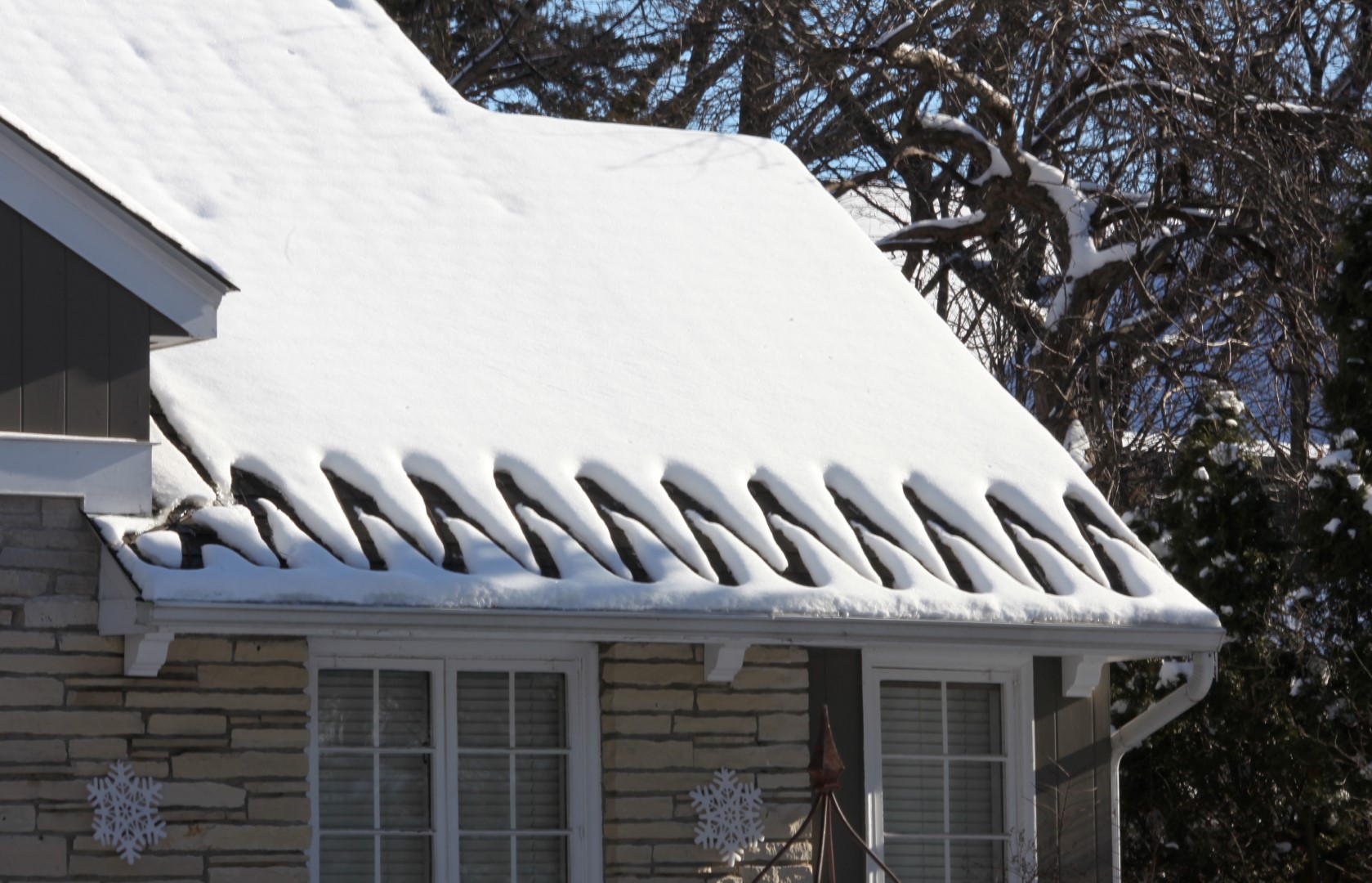
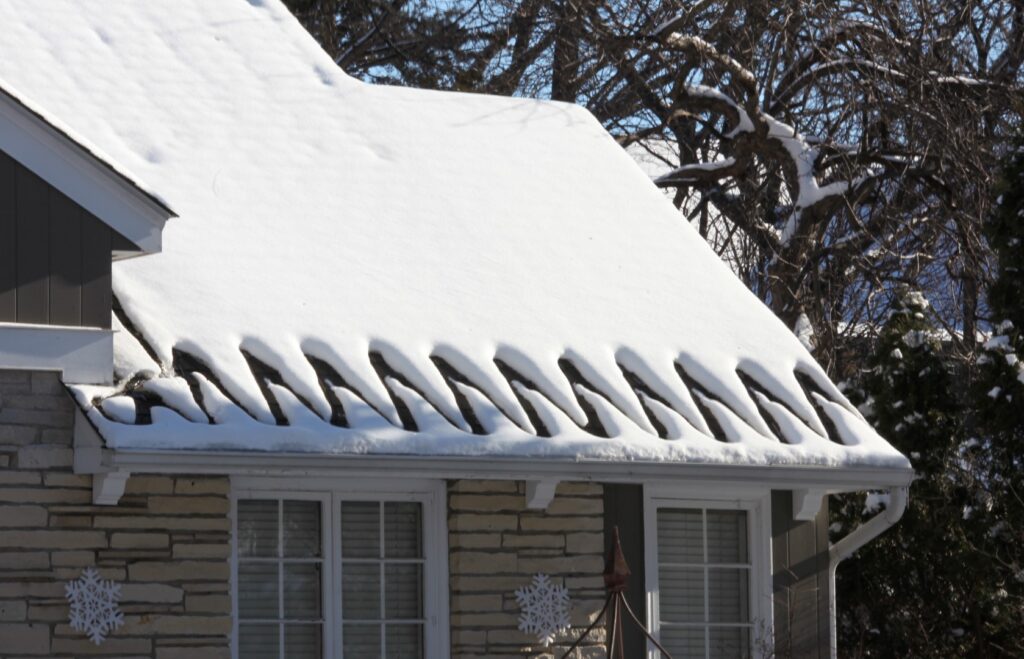
Roof heat cables (often called heat tape) are designed to create a controlled melt path along the eaves. Installers usually place them in a zig-zag pattern near the roof edge. They may also run them into gutters and downspouts. The goal is simple: keep a narrow channel open so meltwater can drain instead of refreezing at the edge.

How it works

Heat cables convert electricity into heat. That heat warms the immediate roof surface where the cable sits. If the cable runs through gutters, it can also help keep a drainage path open.

The goal is not to “heat the whole roof.” The goal is to prevent the eave area from becoming a solid ice barrier.

Where it can help

Used appropriately, heat cables can reduce risk in certain situations. They are most useful when the immediate objective is better drainage at the roof edge during prolonged cold weather.

They tend to help when:

  • Roof geometry concentrates meltwater (valleys, dormers, short roof runs)
  • Eaves stay consistently colder than the upper roof
  • Gutters and downspouts freeze solid and block drainage
  • A homeowner needs short-term mitigation while planning deeper corrective work

In other words, heat cables can be a practical tool for managing the last few feet of the roof system—where ice dams form.

The Limitations (And Why Some Homes Still Leak)

Heat cables often come up as a “solution,” but it helps to define the job they can realistically do.

Heat cables can create a drainage channel. They do not change the conditions that create melting higher up the roof. If attic heat loss keeps warming the roof deck, snow can continue to melt above the cable line. The cable then has to manage a steady supply of meltwater. In a long cold stretch, that can turn into constant maintenance rather than a true fix.

Common limitations include:

  • Symptom management: They reduce refreezing at the eaves, but they don’t stop heat loss that causes melting above.
  • Coverage limits: They only protect the areas where they’re installed. Ice can still form in valleys or other cold zones.
  • Installation sensitivity: Layout, spacing, and whether gutters/downspouts are included all affect performance.
  • Energy and upkeep: They use electricity and you should monitor them. Damage or poor connections reduce effectiveness.
  • Not a substitute for roof integrity: If flashing, underlayment, or edge detailing is compromised, heat cables won’t correct those vulnerabilities.

There is another nuance worth mentioning. Heat cables can create uneven melt patterns. That isn’t automatically a problem. But it can concentrate water flow into specific areas. If those areas include a weak seam or vulnerable flashing transition, the roof can still leak.

None of this means heat cables are “bad.” It means they are a tool with a specific role. The bigger question is whether the home is asking that tool to compensate for a system imbalance.

Root-Cause Prevention: The Roof System, Not a Single Product

When winter roof issues repeat, the most reliable path forward is system-level prevention. That system includes the roof covering, the drainage layers beneath it, the attic environment below it, and the transitions where roofs meet walls, chimneys, and penetrations.

Insulation balance

Insulation slows heat transfer from the living space into the attic. But in winter roof diagnostics, “more insulation” is not always the first move.

If warm air is leaking into the attic through bypasses, insulation alone won’t solve the problem. In some cases, it can even hide the symptom by making the attic feel less obviously warm while the air leakage continues.

A balanced approach looks at:

  • Thin or missing insulation (often near eaves and attic access points)
  • Compressed or wind-washed insulation at the perimeter
  • Whether air leakage is bypassing the insulation layer

Ventilation: intake vs. exhaust

People often describe ventilation as “letting the attic breathe.” The practical goal is temperature and moisture control.

A typical design uses intake at the soffits and exhaust at the ridge (or other high points). What matters most is balance. If intake is blocked, the attic can’t pull in cold air. If exhaust is weak, warm air lingers at the roof deck. If exhaust is strong but intake is weak, the attic can pull conditioned air from the home and increase heat loss.

In Connecticut homes, we often find ventilation systems that exist on paper but underperform in reality. Blocked soffits, short-circuited airflow, and mixed vent types are common causes.

Air sealing: the hidden driver of ice dams

Air sealing is one of the most overlooked drivers of ice dam conditions. Heat doesn’t only move by conduction through insulation. It also moves by air leakage.

Even small gaps can move a surprising amount of warm, moist air into the attic. Common bypasses include:

  • Recessed lights and ceiling fixtures
  • Attic hatches and pull-down stairs
  • Plumbing and vent stacks
  • Chimney chases and framing gaps
  • Bathroom fan duct leaks or disconnected ducts

When warm air enters the attic, it warms the roof deck. It also carries moisture. That moisture can condense on cold surfaces and reduce insulation performance over time.

Roof system integrity and drainage layers

A roof that performs well in winter isn’t only about shingles. It’s about the layers beneath and the details at the edge.

Underlayment selection and installation, ice-and-water protection at eaves and valleys, and decking condition all influence how resilient a roof is when water backs up.

Ice dams create a unique stress test. Water is held in place and can push upward under the roof covering. Strong detailing and appropriate protection help the roof resist that type of event.

Flashing performance at transitions

Many winter leaks that look like “ice dam leaks” are actually flashing leaks that become visible during ice dam conditions.

Valleys, chimneys, skylights, step flashing at walls, and pipe penetrations all depend on precise detailing. When ice dams form, water can be redirected into these transitions in ways that normal rainfall doesn’t replicate. That’s why a winter evaluation should include a close look at flashing performance, not just the field of the shingles.

What We Look For During Winter Roof Evaluations

At MJT Roofing, our focus during winter roof evaluations is identifying the structural causes of damage rather than applying temporary mitigation.

That process typically includes:

  • Attic evaluation to understand heat loss patterns, insulation condition, and moisture indicators
  • Ventilation review to assess intake/exhaust balance and identify blockages or short-circuiting
  • Ice dam risk assessment based on roof geometry, overhang conditions, historical patterns, and drainage behavior
  • Roof integrity inspection focused on edge detailing, underlayment protection, valleys, penetrations, and flashing transitions

The goal is to connect what you’re seeing inside the home—stains, drips, or recurring ice buildup—to the mechanisms causing it. Often, the most valuable outcome is clarity. You learn whether heat cables are a reasonable management tool for your roof, or whether the home is signaling a deeper system issue.

A Calm Next Step

Roof heat cables can be helpful in the right context, especially as a way to maintain a drainage path at the roof edge during prolonged cold weather. But when ice dams and winter leaks repeat, the most dependable long-term improvement usually comes from understanding the system: how heat is escaping, how the attic is ventilating, and how the roof is detailed to manage water when conditions are at their worst.

If you’ve experienced winter roof concerns, a professional evaluation can help determine whether your home is at risk.

MJT Roofing | Winter Roof Damage Prevention Specialists | Connecticut

Illuminating Your Home: Understanding The Value of Skylights

When it comes to home improvements that enhance both the functionality and aesthetics of your space, skylights are a bright idea. As a roofing company, MJT Roofing doesn’t just stop at providing high quality residential and commercial roofs, we also specialize in the installation of skylights. If you’ve ever considered adding one to your home, here’s everything you need to know about skylights, their benefits and impact on resale value.

Skylights are basically specialized windows installed in a roof to bring natural light into the home. These roof-mounted windows come in various designs, including fixed, vented and tubular. Whether your home’s style is modern, traditional or somewhere in between, there’s a skylight option that can complement your roof’s structure and your home’s interior.

Some of the features of skylights include, obviously, natural lighting.  Skylights flood your home with daylight, reducing the need for artificial lighting during the day. Ventilated  skylights can be opened, providing fresh air and reducing humidity levels in areas like kitchens and bathrooms.  Many skylights come with low-E (low emissivity) glass, which improves insulation, minimizes heat transfer, and helps regulate indoor temperatures. Some variations can feature UV-blocking technology to protect furniture, flooring, and artwork from fading. Others, on the high tech side, can be controlled remotely via smartphone apps, allowing for automated opening, closing or shading.

Each one of the features that we just discussed, comes with its own set of benefits, as well. For example, a natural light skylight creates a more inviting and uplifting atmosphere, making your home feel more spacious and vibrant. Studies even suggest that increased daylight can improve mood and productivity, perfect for a home office or living space. A natural light skylight can also help lower your electricity bill. 

Whether you know it or not, ventilation is a home owner’s best friend.  Vented skylights offer excellent airflow, making them a great addition to rooms where air circulation is essential, like kitchens, bathrooms and attics. They can also help reduce your reliance on air conditioning during cooler months.

Resale value is something just about every homeowner is concerned with. Skylights add architectural interest and uniqueness to your home, enhancing its visual appeal. This can make your property stand out in the competitive real estate market. It is a value-adding feature that many buyers find desirable. Homes with ample natural light are often perceived as more luxurious and welcoming, leading to higher offers. In fact, according to real estate experts, natural lighting is a key selling point for prospective homeowners, especially in areas where sunlight is scarce due to having many trees on the property or several days of inclement weather.

Like anything else, proper, professional installation is critical to reaping these benefits. Poorly installed skylights can lead to issues such as leaks or insufficient insulation, which could deter buyers. That’s where MJT Roofing comes in. Our experienced team ensures that every skylight we install integrates seamlessly with your roof, providing durability and peace of mind.

Why Choose MJT Roofing for Skylight Installation?

At MJT Roofing, we understand that your home is your most valuable investment. That’s why we take pride in delivering superior workmanship and high-quality materials for every skylight installation. Our team can guide you in selecting the best skylight type for your needs, ensuring it complements your roof and enhances your home’s design.

Whether you’re looking to brighten up your space, improve ventilation, or add value to your home, skylights are a worthwhile addition. If you’re ready to explore your skylight options, reach out to MJT Roofing today for a consultation. Let us help you bring natural light and timeless beauty into your home.

Adding a skylight isn’t just about making your space brighter, it’s about transforming your home into a haven of comfort, efficiency, and style. Trust MJT Roofing to make it happen.

Get Out Of The Cold. Get Your Roof Ready for Winter. You’ll Be Glad You Did!

Winter storms in Connecticut can be harsh, bringing heavy snow, ice, and wind that challenge even the sturdiest roofs. Preparing your roof for the season is not just about protecting your home but also about ensuring the safety of your family. If you live in Connecticut, you know that The snowiest months are December, January and February, however, snow has been known to fall from November through April.

Connecticut’s annual average snowfall is 28 inches. Hartford receives an average of 33.3 inches of snow during the winter, while New Haven receives about 25.1 inches. Follow these essential tips for pre-winter roof maintenance to avoid costly repairs and enjoy peace of mind as we enter into the colder months.

Inspect Your Roof Before the Snow Hits

Begin by conducting a thorough inspection of your roof. Look for signs of wear and tear such as:

  • Missing or damaged shingles
  • Cracks or gaps in the flashing around chimneys, skylights and vents
  • Sagging areas that may indicate structural issues

If you notice any problems, contact your local roofing company or MJT Roofing (mjtroofingpro.com) to address the issues promptly. Delaying repairs can lead to leaks, ice dams and further damage.

Clean and Maintain Gutters

Clogged gutters are a leading cause of winter roof damage. When snow and ice build up, water has nowhere to go, leading to ice dams and leaks. Ice dams form when the snow on the roof starts to melt creating water build-up in your already clogged gutters. When the temperature dips below freezing, the standing water in the gutter starts to freeze.

As more water builds up behind the frozen dam, it is pushed under the lip of the nearest shingle. As more water collects, more shingles are infiltrated. Before you know it, that water starts to seep into the plywood of your roof and may eventually find its way into walls. Remember, water always takes the path of least resistance.

Clear your gutters of leaves, debris and dirt, and consider installing gutter guards to prevent future blockages. If your gutters are in poor condition, search for “roofers near me” who can repair or replace them before the first snowfall.

Trim Overhanging Branches

Snow-laden branches can snap and fall onto your roof, causing damage to shingles and gutters. Trimming overhanging branches not only protects your roof but also prevents additional debris from accumulating. A professional arborist or handyman can help if the branches are difficult to reach. When the air temperature is very cold, wood becomes brittle and can easily snap under the weight of a heavy, wet snow.

Check Your Roof Ventilation

If you’re considering a roof replacement, now might be the perfect time to switch to metal roofing. Metal roofs are highly durable, shed snow easily and require minimal maintenance. Searching for metal roofing near me will connect you with professionals who can help you decide if this is the right choice for your home. If you’re not finding what you’re looking for, give the folks at MJT Roofing a call at (860) 942-8000.

Reinforce Your Roof’s Structure

Older homes may have roofs that are not designed to handle heavy snow loads. Reinforcing your roof’s structure can prevent sagging and collapse. A professional evaluation from your local roofing company can provide insight into whether your roof needs additional support.

Invest in Roof Heating Cables

Roof heating cables can prevent the formation of ice dams by melting snow and ice along the edges of your roof. These are especially helpful in Connecticut’s variable winter weather and are a smart investment if your roof has experienced ice dam issues in the past. Although this is not often seen, it becoming a more popular option, due to how effective it is.

Schedule a Professional Roof Inspection

Preparing your roof for winter storms can save you from costly repairs, assist in energy inefficiency and alleviate potential safety hazards. Whether you need basic maintenance or a full roof replacement, taking action now is the best way to protect your home. Don’t wait for the first storm to uncover vulnerabilities. Take a few minutes this weekend, or at your earliest convenience to check out your roof and get your roof winter-ready.

By following these tips, you can help to ensure that your roof withstands whatever Connecticut’s winter weather throws your way. A little preparation now can go a long way toward safeguarding your home and your peace of mind.

Eye Protection for Roofers: A Critical BlueCollar Essential

Roofing is one of the most demanding and hazardous professions in the blue-collar world. Among the many safety measures roofers take, eye protection is a critical piece of equipment that ensures their vision and well-being on the job. In this blog post, we’ll explore the essential safety equipment required for roofers and highlight its similarities to the tools used by other hardworking professionals.

The Critical Role of Eye Protection for Roofers

Safety gear for roofers is not optional—it’s a critical aspect of their work that protects them from life-threatening injuries. Here are the must-have items:

  1. Harnesses and Fall Arrest Systems
    • Roofers work at dangerous heights, making harnesses essential. These systems include full-body harnesses, lanyards, and anchors to catch workers in the event of a fall.
    • Similarities to Other Trades: Construction workers, electricians, and window cleaners rely on harness systems when working at height.
  2. Roofing Boots with Slip-Resistant Soles
    • Specialized roofing boots provide excellent grip on steep or slippery surfaces, minimizing the risk of falls.
    • Similarities to Other Trades: Factory workers and machinists use slip-resistant footwear to navigate slick floors in industrial settings.
  3. Hard Hats
    • Hard hats protect roofers from falling objects and accidental head injuries, a universal safety measure in construction and industrial jobs.
    • Similarities to Other Trades: Carpenters, miners, and welders rely on hard hats for protection in hazardous environments.
  4. Gloves
    • Gloves are essential for handling sharp roofing materials, hot tools, and chemicals. They also provide a better grip during installation.
    • Similarities to Other Trades: Mechanics, plumbers, and landscapers use gloves to protect their hands from injury and improve their grip.
  5. Safety Glasses and Face Shields
    • Roofers frequently encounter flying debris, dust, and harsh sunlight that can damage their eyes. Even minor accidents can lead to significant injuries or long-term vision problems without proper eye protection. Safety glasses and face shields provide a reliable barrier, ensuring workers maintain clear vision and prevent eye fatigue during long shifts.
    • Why Eye Protection is Essential: Proper eyewear not only shields workers from immediate harm but also helps reduce strain caused by prolonged exposure to sunlight or harsh conditions. For more information on combating eye fatigue and selecting the proper protective eyewear, visit EyeFatigue.com.
    • Similarities to Other Trades: Welders, auto mechanics, and machinists rely on similar eye protection to shield against sparks, debris, and harmful light.
  6. Respirators and Dust Masks
    • When cutting, grinding, or working with specific roofing materials, respirators protect workers from inhaling harmful particles or fumes.
    • Similarities to Other Trades: Painters, drywall installers, and factory workers use similar gear to ensure clean, breathable air on the job.
  7. Tool Belts and Pouches
    • A roofer’s tool belt ensures easy access to essential tools like hammers, nail guns, and tape measures without unnecessary movement that could jeopardize their balance.
    • Similarities to Other Trades: Electricians, HVAC technicians, and carpenters also use tool belts to keep their equipment within arm’s reach.
    • Similarities to Other Trades: Road workers, warehouse operators, and emergency responders rely on high-visibility clothing to stay safe.

Eye Protection: A Universal Priority in Blue-Collar Professions

Across blue-collar professions, eye protection symbolizes a shared commitment to safety, efficiency, and durability. Protective eyewear is the cornerstone of safety across blue-collar trades, from roofers battling flying debris to welders shielding against sparks. High-quality eye protection enables workers to perform their tasks confidently and safely, ensuring efficiency and long-term health.

This interconnectedness highlights the solidarity within the blue-collar workforce. The tools may differ slightly, but the principles behind their use remain universal: Preparation, Protection, and Pride in Craftsmanship.

Why Safety Equipment Matters: Eye Protection First

Beyond preventing injuries, safety gear—especially eye protection—also:

  • Improves productivity by enabling workers to focus on their tasks without fear of vision-related issues.
  • Builds trust with clients by showcasing a professional commitment to high standards.
  • Enhances long-term health and well-being for workers in physically demanding roles.

Whether you’re a roofer, a welder, or a factory worker, the importance of safety equipment cannot be overstated. At MJT Roofing, we’re proud to be part of the blue-collar community that values hard work, preparation, and excellence. Stay safe, stay prepared, and remember—quality doesn’t cost; it pays!

Why More Homeowners Are Choosing Metal Roofing Over Asphalt Shingles for Their Connecticut Homes

When it’s time for a roof replacement, many homeowners compare the benefits of metal roofing vs asphalt shingles. Modern metal roofing offers various advantages, from energy efficiency to durability and low maintenance, making it an appealing choice. Here’s why metal roofing could be the best roofing material for cold weather in Connecticut and beyond.

1. Durability and Long-Lasting Benefits of Metal Roofing

  • Long-lasting roofing materials: Metal roofs can last 40–70 years, far surpassing the 20–25 year lifespan of asphalt shingles.
  • Rust-resistant design: Many homeowners worry about rust on metal roofs, but today’s metal roofing is designed to resist corrosion. Advanced coatings like Galvalume protect against rust, even in harsh weather conditions, while quality finishes, like Kynar 500, provide a barrier that prevents rust and keeps your roof looking great for decades.
  • Ideal for cold climates: Metal roofing is durable enough to withstand Connecticut’s snow and ice, with little risk of cracking, rusting, or warping.

2. Energy Efficiency and Environmental Benefits

  • Reflects solar heat: Metal roofing reflects solar heat more effectively than asphalt shingles, which helps keep homes cooler in the summer and reduces energy costs by 10–25%.
  • Eco-friendly roofing materials: Unlike asphalt shingles, which add to landfill waste, most metal roofs are made from recyclable materials and can be fully recycled, contributing to a greener, more sustainable choice.
  • Metal roofing for Connecticut homes: This sustainable option fits well with the environmental goals of many Connecticut homeowners.

3. Low-Maintenance and Rust-Free Roofing Option

  • Low maintenance and rust resistance: Metal roofs require very little upkeep. They are resistant to common problems like moss, mold, and mildew, which are more prevalent in asphalt shingles. Thanks to corrosion-resistant materials and coatings, modern metal roofs won’t rust easily, even in wet climates.
  • Minimal upkeep needs: A metal roof only needs occasional checks for debris and minor touch-ups, making it one of the best low-maintenance roofing materials.

4. Enhanced Curb Appeal and Property Value

  • Aesthetic flexibility and rust-free finish: Metal roofs are available in various styles and colors, from traditional to modern, providing a sleek, rust-free finish that adds to a home’s curb appeal.
  • Increased property value: Homes with metal roofs often see a boost in resale value due to their energy efficiency, low maintenance, and longevity—all features buyers look for.

5. Cost Efficiency and Structural Integrity

  • Lighter and rust-resistant structure: Metal roofing is lighter than asphalt, reducing structural strain. With its rust-resistant properties, it’s built to withstand rain, snow, and other conditions without the risk of corrosion.
  • Long-term cost savings: While the upfront cost of metal roofing may be higher, the reduction in maintenance and its durability make it a cost-effective investment in the long term.

Switching to a metal roof provides a wide range of benefits for Connecticut homeowners, including durability, rust resistance, and energy efficiency. With minimal upkeep and an appealing rust-free finish, metal roofing is an investment that adds value, resilience, and beauty to your home. To learn more about metal roofing or get a quick, customized estimate, check out MJT Roofing’s InstaQuote and financing options. Contact MJT Roofing at (phone number) or visit mjtroofingpro.com for additional information.

Does Roof Color Really Matter?

Many a local homeowner has asked us this one question: “Does the color of your roof matter?” The short answer is “Absolutely!” It goes well beyond simply improving your home’s curb appeal with something that’s different from the norm. 

Qualified Connecticut roofing contractors like your friends here at MJT Roofing will tell you that roof color is a factor in three major areas.

  • Reflecting and absorbing direct sunlight
  • Helping your roof last longer
  • Additional curb appeal (everyone loves a nice-looking roof)

Reflecting and absorbing direct sunlight

The color of your roof is the most significant contributor to how much direct sunlight your roof absorbs. A darker-colored roof allows sunlight to be absorbed, thereby raising the temperature in your home. This will increase your cooling bills during the summer and directly affects how hard your cooling system has to work during the summer. 

However, a darker-colored roof is very advantageous during those Connecticut winters. During the winter months, a darker roof will absorb direct sunlight and radiate heat throughout the surface of your roof to help snow and ice melt quicker, whereas a lighter-colored roof will reflect more of the direct sunlight. This results in lower energy bills and helps your cooling system work efficiently and last longer.

Longevity of Your Roof

For quite some time, many have believed that roof color directly affects the longevity of your roof. However, after numerous trials from experienced roofing manufacturers, we find less and less of a correlation between the two. However, it is important to remember that heat is a significant factor in your roof’s longevity. Since the absorption of heat from sunlight is affected by your roof color, the color of your roof can indirectly affect the longevity of your roof.

Curb Appeal

When it comes to the aesthetic value of your home, the color of your roof plays a significant role! A roof color that just doesn’t fit with the rest of the house will cause you disappointment, and it will also cost you money when it comes time to sell your home. Generally, the rule of thumb is that lighter colored roofs go better with lighter colored brick or siding, while darker colored roofs go better with darker colored brick or siding.

Finally, remember that darker roofs can make a home seem smaller, while lighter roofs tend to make a home seem larger! And when it comes to curb appeal, size does matter.

Call MJT Roofing today!

At MJT Roofing, our goal is to ensure your next roof replacement stands the test of time. We hop on your roof and provide a thorough inspection of anything that may have been damaged. If everything looks great, we’ll continue to check in periodically. If there is significant enough damage, we will walk you through the next few steps to get started on roof repair and replacement. 

Over the next several weeks and months, we’ll continue to publish helpful content to our blog page so that MJT Roofing can be a go-to resource for you!

How MJT Roofing Prepares Your Home for a Roof Replacement

At MJT Roofing, we understand that replacing a roof goes beyond just the installation. It’s crucial to properly prepare your home to ensure a smooth, efficient process that protects your property from damage.

Communication and Planning
We begin with a clear plan and communication, outlining timelines and addressing any questions to ensure we’re on the same page.

Clearing the Area
We advise clearing patios, furniture, and any other obstacles near your home’s perimeter to ensure unhindered access for our crew and equipment.

Property Protection
We protect vulnerable areas such as windows, landscaping, and air conditioning units by covering them with tarps to shield them from falling debris.

Interior Protection
To prevent dust and debris from affecting your home’s interior, we cover attic openings, furniture, and valuables.

Safety Precautions
Adhering to all Connecticut safety regulations, our crew uses safety harnesses and warning signs to protect everyone during the replacement process.

Clear Access
We coordinate to ensure clear access for our crew and equipment, sometimes temporarily moving vehicles or working with neighbors to avoid disruptions.

Pets and Children
For safety, we encourage keeping pets and children indoors or away from the work area while work is in progress.

Final Inspection
Before work begins, we conduct a thorough walkthrough to address any final concerns and ensure your home is fully prepared.

At MJT Roofing, we pride ourselves on going beyond basic installation, ensuring that every aspect of your home is considered for a successful and efficient roof replacement. Call us today for a free consultation!

How Community-Minded Roofers in Connecticut Deliver Better Results

When it comes to selecting a roofing company, the choices can be overwhelming. However, there’s one critical factor that often separates a good roofer from a great one: a commitment to the local community. At MJT Roofing, based in Willimantic, Connecticut, we believe that being community-minded isn’t just a philosophy; it’s a way of doing business. Here’s why choosing a roofer with strong ties to your community is the best decision you can make for your home and your neighborhood.

Understanding Local Needs and Challenges

MJT Roofing specializes in residential roofing for Hartford, Middlesex, Tolland, Windham, and New London counties. As locals ourselves, we understand the unique challenges faced by Connecticut homeowners. From harsh winters to humid summers, your roof must withstand a wide range of weather conditions. A community-focused roofer has firsthand experience with these challenges and knows the best materials and techniques to protect your home.

We don’t just build roofs; we build roofs that last in New England’s ever-changing climate. That’s the advantage of working with a company that knows your area as well as you do. When searching for roofing companies in Connecticut, choosing one that understands your local needs is essential.

Invested in Quality and Reputation

A community-minded roofer doesn’t just work for the paycheck—we work to build a reputation. At MJT Roofing, our success depends on the trust and satisfaction of homeowners like you. We’re not just here to do a job; we’re here to make a lasting impression. That’s why we go above and beyond to ensure quality craftsmanship and exceptional customer service.

Every roof we install is a testament to our commitment to the community. By prioritizing excellence, we ensure that our neighbors are not only satisfied today but confident in their choice for years to come. Among roofing companies in Connecticut, we aim to set the standard for quality and dependability.

Boosting the Local Economy

Choosing a local roofer like MJT Roofing means you’re investing in your community. When you hire us, you’re supporting a business that creates jobs and keeps money circulating within Hartford, Middlesex, Tolland, Windham, and New London counties. A community-minded roofer cares about contributing to the local economy and ensuring that the neighborhood thrives as a whole. Supporting roofers in Connecticut helps sustain businesses that are essential to the area’s growth.

Personalized Service You Can Trust

Large, out-of-state roofing companies may offer flashy ads and deep discounts, but they often lack the personal touch. A community-focused roofer takes the time to get to know you, your home, and your unique needs. At MJT Roofing, we pride ourselves on treating every client like family. From the initial consultation to the final nail, you’ll experience personalized service that’s built on trust and mutual respect. When looking for CT roofers, choosing one that values personal connections makes all the difference.

Blue Collar Work Ethic – Responsive and Reliable

Emergencies happen, and when they do, you want a roofer who’s nearby and ready to help. MJT Roofing’s proximity to the communities we serve ensures that we can respond quickly when you need us most. Whether it’s storm damage or a sudden leak, our team is just a call away. Being part of the community means we’re always here to support you. For dependable roofing in Connecticut, you can count on us to be there when it matters most.

Committed to Giving Back

A true community-minded roofer doesn’t stop at providing excellent service; they actively contribute to the betterment of the area. MJT Roofing is proud to support local events, charities, and initiatives that strengthen the fabric of our neighborhoods. When you choose us, you’re partnering with a company that’s dedicated to making a positive impact both on and off the roof.

Building Stronger Roofs and Stronger Communities

Your roof is one of the most important investments you’ll make for your home. When you choose a community-minded roofer like MJT Roofing, you’re not just hiring a contractor—you’re investing in a partner who cares about your home and your neighborhood. With deep local roots, unmatched expertise, and a commitment to giving back, MJT Roofing is proud to be the best choice for homeowners throughout Hartford, Middlesex, Tolland, Windham, and New London counties.

For roofing in Connecticut that you can trust, contact MJT Roofing today to learn how we can help you protect your home and build a stronger community, one roof at a time.

Easy Way to Roof Replacement and Repair

Lorem Ipsum is simply dummy text of the printing and typesetting industry. Lorem Ipsum has been the industry’s standard dummy text ever since the 1500s, when an unknown printer took a galley of type and scrambled it to make a type specimen book. It is a long established fact that a reader will be distracted by the readable content of a page when looking at its layout letraset sheets of letters.

All the Lorem Ipsum generators on the Internet tend to repeat predefined chunks as necessary, making this the first true generator on the Internet. It uses a dictionary of over 200 Latin words, combined with a handful of model sentence structures, to generate Lorem Ipsum which looks reasonable.

Sit amet consectetur adipiscing elit eiusmod tempor incididunt ut labore dolore Lorem Ipsum is simply dummy text of the printing and typesetting industry. Lorem Ipsum has been the industry’s standard dummy text ever since the 1500s, when an unknown printer took a galley of type and scrambled it to make a type specimen book. It is a long established fact that a reader will be distracted by the readable.

All the Lorem Ipsum generators on the Internet tend to repeat predefined chunks as necessary, making this the first true generator on the Internet. It uses a dictionary of over 200 Latin words, combined with a handful of model sentence structures, to generate Lorem Ipsum which looks reasonable.

Why Roofing Material Warrenties is Important?

Lorem Ipsum is simply dummy text of the printing and typesetting industry. Lorem Ipsum has been the industry’s standard dummy text ever since the 1500s, when an unknown printer took a galley of type and scrambled it to make a type specimen book. It is a long established fact that a reader will be distracted by the readable content of a page when looking at its layout letraset sheets of letters.

All the Lorem Ipsum generators on the Internet tend to repeat predefined chunks as necessary, making this the first true generator on the Internet. It uses a dictionary of over 200 Latin words, combined with a handful of model sentence structures, to generate Lorem Ipsum which looks reasonable.

Sit amet consectetur adipiscing elit eiusmod tempor incididunt ut labore dolore Lorem Ipsum is simply dummy text of the printing and typesetting industry. Lorem Ipsum has been the industry’s standard dummy text ever since the 1500s, when an unknown printer took a galley of type and scrambled it to make a type specimen book. It is a long established fact that a reader will be distracted by the readable.

All the Lorem Ipsum generators on the Internet tend to repeat predefined chunks as necessary, making this the first true generator on the Internet. It uses a dictionary of over 200 Latin words, combined with a handful of model sentence structures, to generate Lorem Ipsum which looks reasonable.

Understanding the Impact of Condensation in Your Attic

Condensation in the attic is a common issue that homeowners often underestimate. While it might seem like a minor inconvenience, the effects of condensation can have far-reaching consequences for your home’s structural integrity and your family’s health. We’ll explore what condensation is, why it occurs in attics and the potential consequences it can have. Remember, you can always call mjtroofingpro.com at (860) 942-8000 to get more information on the effects of condensation in your attic.

Condensation is the process by which water vapor in the air transforms into liquid water when it comes into contact with a cold surface. In the context of attics, condensation typically occurs during temperature fluctuations, such as when warm, moist air from the living spaces below rises and meets the cooler surfaces in the attic.

Causes of Condensation in the Attic: Several factors contribute to the occurrence of condensation in the attic. Understanding these causes is crucial for addressing the issue effectively:

  1. Poor Ventilation: Inadequate attic ventilation is a major contributor to condensation. When moist air becomes trapped in the attic due to poor ventilation, it can lead to the accumulation of condensation on surfaces. A well functioning ventilation system can help mitigate the occurrence of condensation in your attic.
  2. Insufficient Insulation: Although less likely, in some cases, insufficient insulation in the attic can result in temperature imbalances. Warm air from the living spaces can penetrate the attic, leading to condensation when it encounters cooler surfaces. For example, if the ceiling of your attic is exposed wood, you run a much higher risk of condensation forming that if the ceiling is insulated and finished.
  3. Household Activities: Daily activities such as cooking, bathing, and doing laundry generate moisture within the home. If this moisture-laden air rises to the attic, it can contribute to condensation. These are things we all do on a daily basis. Therefore, temperature fluctuations are going to be inevitable.

Effects of Condensation: The effects of condensation in the attic can be wide-ranging and impact various aspects of your home:

  1. Structural Damage: Prolonged exposure to moisture can compromise the structural integrity of your home. Wood beams, rafters, and other materials in the attic can rot or weaken over time. This can include your chimney.
  2. Mold and Mildew Growth: Condensation creates an ideal environment for mold and mildew to thrive. These fungi not only pose health risks but can also cause unpleasant odors and damage to materials.
  3. Decreased Energy Efficiency: The presence of condensation can reduce the effectiveness of insulation in the attic, leading to increased energy costs as your heating and cooling systems work harder to maintain a comfortable indoor temperature.
  4. Health Concerns: Mold spores released into the air due to condensation can trigger respiratory issues and allergies, posing health risks to your family members.

Preventing and Addressing Condensation: To mitigate the effects of condensation in the attic, consider the following preventive measures:

  1. Proper Ventilation: Ensure that your attic is well-ventilated to allow the escape of moist air. Installing vents and fans can help maintain optimal air circulation.
  2. Adequate Insulation: Upgrade insulation in the attic to regulate temperature and prevent warm air from infiltrating the space.
  3. Sealing Leaks: Identify and seal any gaps or leaks in the attic to prevent the intrusion of moisture-laden air from the living spaces.
  4. Regular Inspections: Conduct regular inspections of your attic to detect early signs of condensation and address them promptly. For more information on scheduling an inspection, please call mjtroofingpro.com at (860) 942-8000.

Condensation in the attic is a serious issue that demands attention. By understanding its causes and effects, homeowners can take proactive measures to prevent and address condensation, preserving the integrity of their homes and ensuring the health and well-being of their families. Regular maintenance and a commitment to proper ventilation and insulation are key to keeping condensation at bay.

For more information on condensation, or any question you may have related to your roof, please call mjtroofingpro.com at (860) 942-8000. MJT Roofing wants to be your roofer for life. Having served Connecticut for over 15 years, we’ve helped thousands of families and businesses with everything from replacing a few missing shingles to swapping out windows and gutters, installing new siding to improve a home’s curb appeal and complete roof replacement.

7 Questions to Ask Your Roof Inspector

Just because you know there’s something wrong with your roof doesn’t mean you know how bad the damage is, when or how it happened, and what it’s going to take to fix it. That’s why you hire a professional roof inspector — to get up there and assess the damage. And if you’re like most people, you’ll probably have a ton of questions to ask your roof inspector. So don’t be afraid to ask away!

Any reputable roof inspector will be more than willing to answer any question a homeowner or commercial client throws at them. These 7 questions will help get the conversation started.

  1. How bad is the damage?
    Your roofer will answer this question before you ask. Just make sure to ask for specifics and request that they take pictures. Pictures are vital for documenting the inspection. They also help you see what they saw. You should know how much damage there is, whether it’s a few loose shingles or something worse.
  2. How old is my roof?
    Some home and business owners know exactly how old their roof is. Others don’t, usually because they bought the property from someone else. The average roof is built to last 20 to 30 years, so this will help you and your roof inspector gauge if you need a full roof replacement.
  3. Do you think the existing materials are good quality?
    If the original roof wasn’t up to par to begin with, replacing it with the same materials isn’t in your roof’s best interests. Knowing this will help you decide if an upgrade is necessary so that your roof lasts longer.
  4. Are you only replacing the shingles?
    It’s important to ask your Connecticut roof inspector if your existing ventilation system is holding up. The same goes for metal flashings, gutters, etc. Any damage to these components may warrant a total replacement beyond just shingles. And this will directly impact how much money you have to pay.
  5. How will you protect the rest of my property?
    Once a roof replacement is underway, your property becomes a construction site. So, it’s important to get an idea of how your roofer will protect flower beds and other landscaping features, what they’ll do if bad weather hits, and what their cleanup process entails.
  6. How long will the roof replacement take?
    There are crews — like ours at MJT Roofing — that can complete a roof replacement in as little as a single day. Depending on the size and complexity of the home, it could take longer.
  7. Do you handle other repairs?
    If your property was damaged in a storm, you may also have gutter damage, window cracks, etc. Relying on the same company to fix these issues, too, will get your home back to pre-storm condition faster.
  8. Call MJT Roofing today!
    There are so many things to be aware of as a homeowner when it comes to your roof. Conducting routine professional roof inspections is one, and over the next several months, we’ll continue to publish helpful content to our blog page so that MJT Roofing can be a go-to resource for you!

What Are the Pitfalls of Installing Skylights on a Roof?

Have you ever walked into a friend’s house and been envious of their new skylight? Does it make you want one of your own? We can’t blame you; skylights can be a fun addition to any home, especially when it comes to adding natural light, space, and letting in fresh air. Plus, it’s just a really cool conversation starter! But are there pitfalls to installing skylights on a roof?

There are pros and cons to any decision we make in life — including those that impact our roof. For the vast majority, though, you really can’t go wrong with a skylight. There are numerous benefits:

  • Adds natural light
  • Improves your home’s appearance
  • Improvements to resale value
  • Improved energy costs
  • Letting in fresh air
  • Adds space to a room

The trick, however, is to ensure your next skylight is installed correctly. A poorly installed skylight on a roof can create a slew of unintended pitfalls you didn’t know were possible.

Below are some of the common pitfalls to consider when installing a skylight on a roof:

  1. Air leaks — Air leaks are very common in skylight installation, usually because of subpar materials, improper placement, doing it yourself, or hiring a professional without the proper experience. As a result, you’ll lose heat or cool air that you’d rather keep inside, depending on the season.
  2. Too much light — Natural light is a good thing, but if you install a skylight in the wrong location, you run the risk of bringing in too much light and heat. A professional can consult with you on which location is best and how to get the most out of your skylight installation.
  3. Purchasing inferior glass — With any skylight, you open yourself up to possible damage from falling tree limbs, hail, snow, etc. Make sure to purchase laminated glass, which is less likely to shatter and cause injuries to anyone in the house.
  4. Potential roof damage — A skylight is a great addition to any roof (in theory). Depending on the type of roof you have, you could cause unintended structural damage — especially if the installation requires you or the professional you’re using to modify the roof.

Call MJT Roofing today!

There are so many things to be aware of as a homeowner when it comes to your roof. Conducting routine roof inspections is one way to ensure your roof lasts as long as possible. Ensuring any modifications that you make (including adding a skylight) don’t harm your roof is another. Over the next several months, we’ll continue to publish helpful content to our blog page so that MJT Roofing can be a go-to resource for you!

How are roofing materials different today than they were 30 years ago?

You may think that a roof is a roof, and how they were constructed 30 years ago couldn’t possibly be much different than what is taking place now. But with advancements in roofing technologies over the past 30 years, new Connecticut roofing materials can look just like the more traditional ones but perform much better and have less construction cost.

Below are some of the advancements in roofing materials we have seen over the last 30 years.

ADVANCEMENTS IN ROOFING SHINGLES

Asphalt shingles have been around for over 100 years. Paper, wood pulp, and cotton cloth once reinforced asphalt shingles. Today, however, they are reinforced with fiberglass fabric. The fiberglass material makes them more durable and adds to their lifespan.

Traditional slate, terra cotta, or clay shingles are now available in synthetic versions. These versions are lighter, more energy-efficient, and allow for more colors than traditional ones.

Traditional wood shingle or shake roofs are beautifully rustic but represent an extreme fire hazard. As a result, many communities in the United States have banned their use. However, synthetic versions of wood and shake shingles offer the same beautiful appearance while minimizing the fire hazard of traditional shingles and shakes.

IMPROVEMENTS IN UNDERLAYMENT

Over the past 30 years, we have seen improvements in roof underlayment, too. If you’re not familiar with underlayment, it is that layer of protection between the metal or the shingles and the roof’s deck. The traditional thin layer of roofing felt has been replaced with a new synthetic material that is much less resistant to ripping or tearing away in high wind conditions.

In addition, the thickness of traditional underlayment has increased. Thirty years ago, Connecticut roofers used a 15-pound felt. Today, nearly all roofs are covered with a 30-pound synthetic felt. An adhesive has also been added that makes the felt much easier to install and helps the felt remain in place in high wind conditions.

IMPROVEMENTS IN NAILS, TACKS, AND OTHER FASTENERS

Nails, tacks, and other fasteners represent the only penetrations into the roofing surface! Technology has improved quite a bit in the last 30 years. We have seen the transformation from copper to aluminum to steel to stainless steel and, finally, to galvanized steel.

Galvanized steel keeps the nail or tack from corroding and losing its integrity. We have also seen the addition of ribbed shafts that help keep the nail or tack in place within the wood decking.

If a nail corrodes or slips out, it leaves a hole for moisture to enter through. That’s why the advances in nail, tack, and other fastener technology have been vitally important.

Call MJT Roofing today!
There are so many things to be aware of as a homeowner when it comes to your roof. Over the next several months, we’ll continue to publish helpful content to our blog page so that MJT Roofing can be a go-to resource for you!